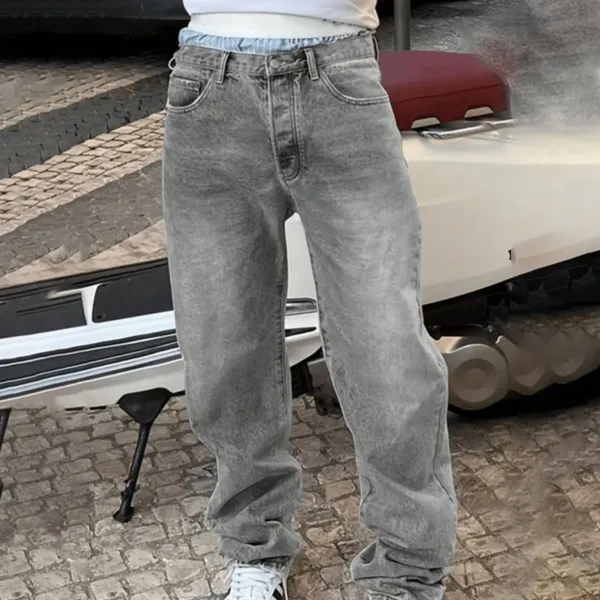
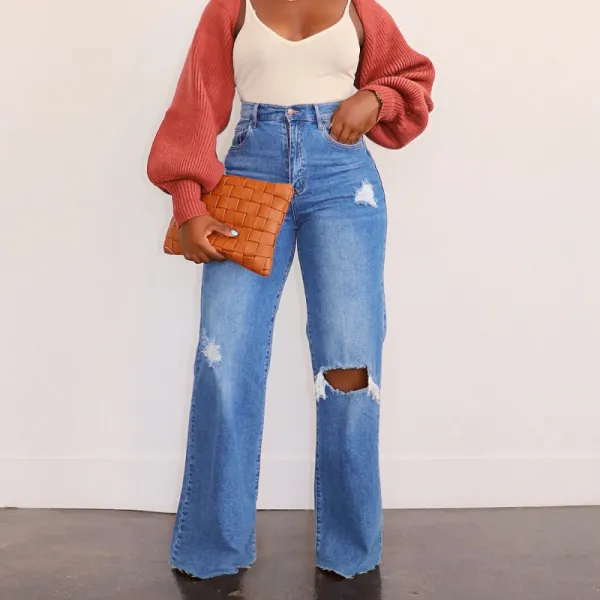
> For the complete documentation index, see [llms.txt](https://www.babareplica7.ru/llms.txt). Markdown versions of documentation pages are available by appending `.md` to page URLs; this page is available as [Markdown](https://www.babareplica7.ru/retailers-checklist-how-to-vet-a-wholesale-denim-supplier-for-quality-and-consistency.md).
# Retailers' Checklist: How to Vet a Wholesale Denim Supplier for Quality and Consistency
In the retail industry, your brand is only as good as your product. For any boutique or e-commerce store focusing on denim, your wholesale partner is the most critical component of your business model. If the stitching on your best-selling jeans fails, or if a batch of jackets arrives with inconsistent dye lots, the cost isn't just in the refund—it's in the erosion of your brand equity.
In 2026, the retail environment demands perfection. With digital storefronts and social media reviews, a single quality control failure can be documented and shared instantly. This guide provides a comprehensive checklist for retailers to vet, test, and manage wholesale denim suppliers to ensure quality, consistency, and long-term profitability.
### 1. The Pre-Vetting Phase: Assessing Operational Capacity
Before you ever place a bulk order, you must look beyond the photos on a wholesale platform. You need to verify the operational capabilities of the supplier.
* The In-Line QC Question: Ask the supplier, "Do you perform quality control checks at every stage of production?" A high-quality partner will inspect fabric tensile strength, sewing line integrity, and hardware placement *while* the item is being assembled, not just after it is packaged.
* Capacity Verification: Can they scale? If you place an order for [wholesale womens jeans](https://www.fashiontiy.com/wholesale-jeans.html), can they handle a 20% increase in volume if your marketing takes off? Reliable partners have documented throughput capacity.
* Compliance Transparency: Request documentation regarding their working conditions. A supplier that is transparent about their labor practices is almost always more transparent about their production standards.
### 2. Hardware and Trim Inspection: The "Tell" of Quality
The hardware on a denim garment—buttons, rivets, zippers, and shank fasteners—is the most common point of failure. It is also the easiest thing to cheapen during manufacturing.
* The Tug Test: When evaluating a sample, tug firmly on all rivets and buttons. They should be immovable and securely seated into the fabric.
* Corrosion Resistance: Ask [wholesale denim jackets](https://www.fashiontiy.com/wholesale-denim-jackets.html) manufacturers what material they use for their hardware. Brass and stainless steel are the standards. If they are using cheap, zinc-based alloys that show signs of oxidation or plating flaking right out of the box, walk away.
* Zipper Performance: The zipper is the "engine" of the garment. For high-quality denim, look for industry-standard zippers like YKK. If a supplier uses unbranded, generic zippers, you are effectively baking in future returns.
### 3. Fabric Integrity: Testing for Recovery and Shrinkage
The fabric is the "anatomy" of the jean. In 2026, the best-selling denim is that which balances structure with comfort.
* Recovery Testing: Take a sample of the fabric (especially the high-stretch blends used in [wholesale jean shorts](https://www.fashiontiy.com/wholesale-denim-shorts.html)) and stretch it to its limit. Hold it for 30 seconds. Release it. If the fabric does not return to its original shape within a few seconds, it is prone to "bagging out." This is the number one cause of customer dissatisfaction in online denim retail.
* Shrinkage Simulation: If you are sourcing [wholesale clothing mens jeans](https://www.fashiontiy.com/men-denim.html) that are advertised as "pre-shrunk," ensure that the supplier uses proper sanforization processes. If possible, perform a home-wash test on a sample unit to verify that the fit does not warp or shrink excessively.
### 4. The "Consistency Check" for Bulk Production
The biggest risk in bulk procurement is the "sample-to-production gap." The sample you receive in the mail is often hand-checked, while the bulk order is produced by a team under time pressure.
* Dye Lot Uniformity: Inquire about their dye lot tracking. A high-end manufacturer ensures that every bolt of denim used in a production run comes from the same dye batch. If you receive a bulk order where half the units are slightly darker than the other half, it’s a sign of a failed QC process.
* Measurement Tolerance: Ask for their "measurement tolerance sheet." Every manufacturer should have an acceptable margin of error (usually +/- 0.5 inches). If they cannot produce this document, they do not have a formal quality management system.
### 5. Prioritizing Safety and Ethics in Childrenswear
When sourcing [wholesale kids jeans](https://www.fashiontiy.com/kids-denim.html), the vetting process must become even more rigorous. You are not just selling apparel; you are selling to parents who prioritize safety and comfort.
* Chemical Safety: Ensure the supplier complies with international standards regarding azo-dyes and formaldehyde levels.
* Mechanical Integrity: Check for loose threads, sharp edges on hardware, or snap-buttons that are not securely fastened. These are not just quality issues—they are safety hazards.
### 6. The Value of Customization as a Quality Control Measure
Interestingly, moving toward [custom jeans](https://www.fashiontiy.com/custom-jeans.html) can actually improve your quality control results. When you dictate the specifications of the denim—the specific hardware brand, the exact thread weight, the proprietary wash process—you are forcing the manufacturer to adhere to your standards.
Many retailers find that as soon as they move from "off-the-shelf" wholesale to "custom-branded" denim, the attention to detail from the factory increases, as the supplier now understands that the product represents a specific, identifiable brand.
### 7. The Retailer’s QC Checklist: A Summary
When you receive a shipment, use this quick-fire checklist to vet the batch before you add it to your inventory:
1. Visual Inspection: Are the wash patterns consistent across the stack?
2. Stitch Audit: Are there any dropped stitches? Is the thread weight consistent throughout the garment?
3. Hardware Audit: Do all zippers operate smoothly? Are all buttons securely fastened?
4. Sizing Audit: Take three units at random from the stack and compare their measurements to the original spec sheet. Are they within the agreed-upon tolerance?
5. Tagging/Packaging: Is the branding correctly aligned? Is the packaging moisture-resistant to prevent mold during shipping?
### 8. Building Long-Term Trust
Vetting a wholesale denim supplier is not a "one-and-done" task. It is a continuous loop of auditing, feedback, and optimization. By establishing clear standards, demanding transparency, and treating your manufacturers as partners rather than commodities, you ensure that your store remains synonymous with quality.
In 2026, there is no room for poor quality in the retail space. Consumers have too many choices and too little patience for failure. By implementing the robust vetting processes outlined in this guide, you protect your brand, increase your customer lifetime value, and build a denim collection that sells itself. Start today: audit your current supply chain, establish your tolerance thresholds, and communicate those standards clearly to your partners. Your business—and your customers—will reap the rewards of that diligence.